Lighting in Smart Home
How to choose lighting for a smart home? Comparison of 230V AC, 24V DC, and addressable LED systems.
Lighting is the most important element in building the mood and functionality of a home. In a boneIO-based system, you have complete freedom – you can combine classic bulbs, modern 24V dimmable systems, and impressive addressable strips.
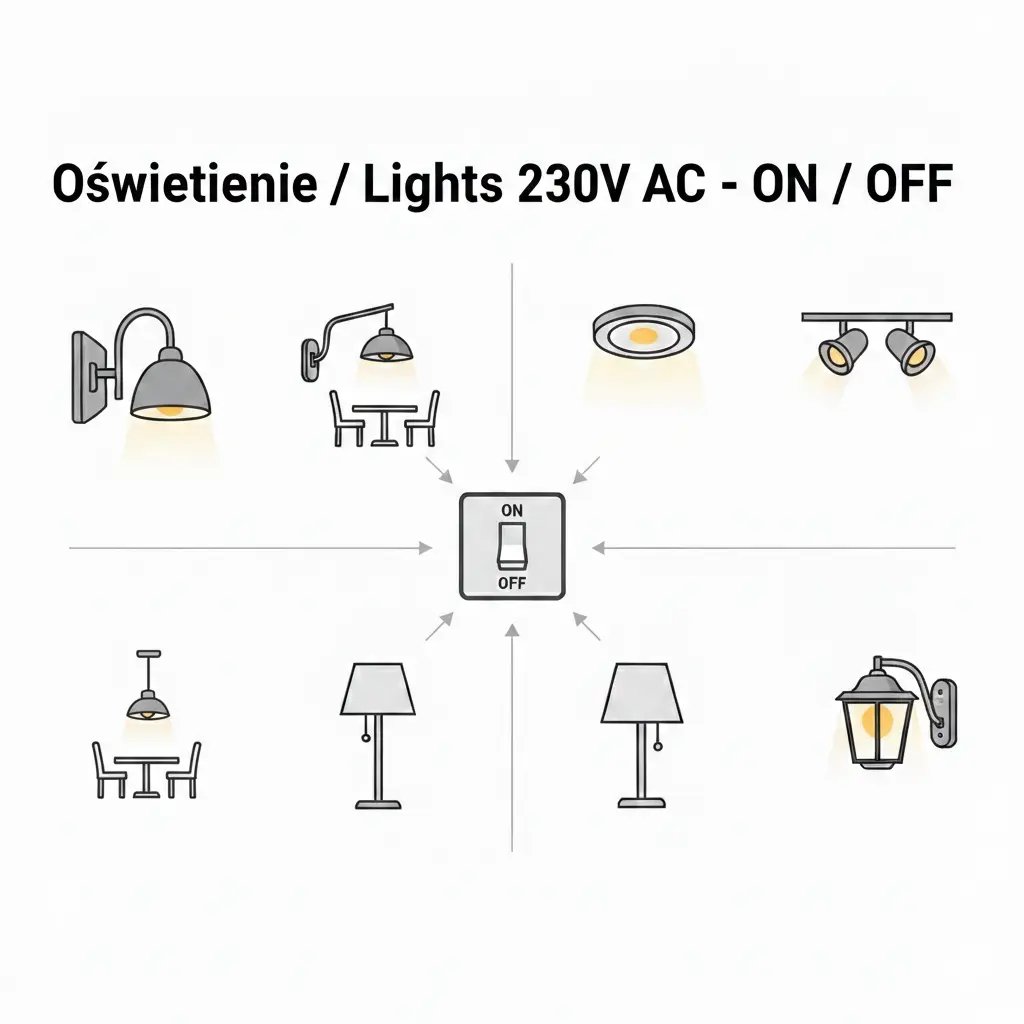
1. 230V AC Lighting (Standard)
This is the most universal approach, using traditional bulbs and fixtures.
- Advantages: Huge selection of fixtures (ceiling lights, chandeliers, spots), low light source costs, simple installation.
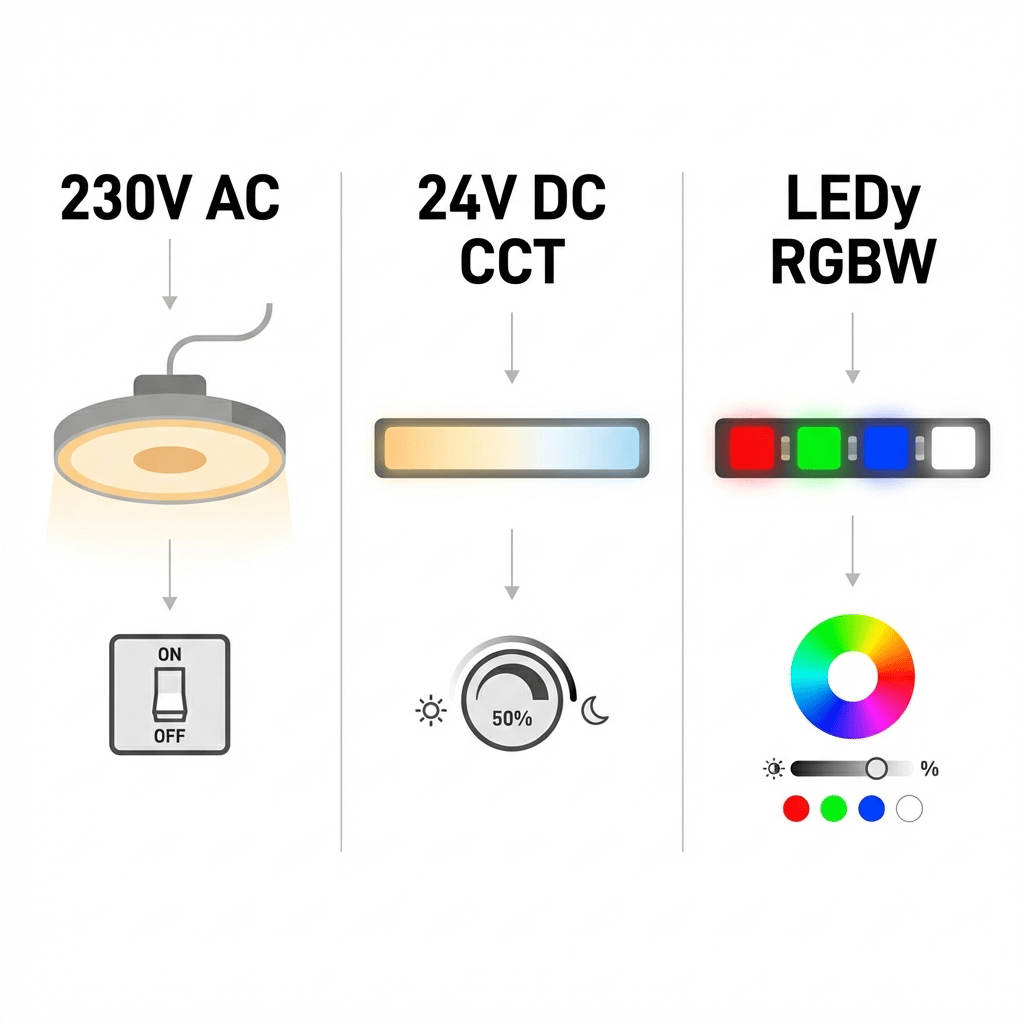
- Control: Works on an On/Off basis using relays.
- Dedicated hardware:
- boneIO 32x10A: A true "workhorse" – one controller handles up to 32 independent lighting circuits throughout the house.
- boneIO 8x10A / CoverMix: Ideal for smaller zones or when you need to distribute controllers in different parts of the cabinet.
Tip: If you want to dim 230V bulbs, remember that standard relays can't do this. In that case, consider switching to a 24V DC system or external dimming modules.
2. 24V DC Lighting (Dimmable and Colored)
If you want smooth brightness control or to change the color temperature of light (warm/cool), the 24V system is the best choice.
- Advantages: Smooth dimming without flickering, safe low voltage, ability to use RGB/RGBW strips and modern 24V LED bulbs.
- Applications: Mood lighting in the living room, countertop backlighting in the kitchen, gentle "night" lighting in hallways and bathrooms.
- Dedicated hardware:
- boneIO Dimmer LED gen2: Supports up to 8 independent channels. You can connect 8 single-color strips or, for example, 2 RGBW strips.
3. Addressable LEDs (Pixel LED)
This is a solution for the most demanding users, where each diode on the strip can light up differently.
- Advantages: Amazing visual effects (flowing light), ability to create light notifications (e.g., kitchen strip pulsing red when the gate is open).
- Applications: Staircase lighting, ceiling coves, home theaters.
- Integration: A controller for this type of lighting is currently in the design phase.
Summary – Which Lighting to Choose?
| Feature | 230V AC Lighting | 24V DC Lighting | Addressable LED |
|---|---|---|---|
| Main function | Main lighting (ON/OFF) | Mood and dimming | Effects and notifications |
| Fixture selection | Very large | Medium (mainly strips/spots) | LED strips |
| Costs | Low | Medium (requires DC power supplies) | Higher |
| boneIO controller | Relay series (32x, 8x) | Dimmer LED gen2 | In design phase |
Best Practices for Lighting
- Mix systems: The best results come from combining strong main lighting (230V) with gentle accent and mood lighting (24V).
- DC Power Supplies: For 24V systems, choose high-quality power supplies (e.g., HDR or LRS series from Mean Well) and mount them in the cabinet next to boneIO Dimmer controllers.
- Loop Rule: For long 24V LED strips, supply power from both ends of the strip to avoid brightness drops.
Electrical Cabinet and Network Rack
How to choose the right size for a Smart Home electrical cabinet? Learn about key components and cabinet organization principles.
Buttons, Sensors and Inputs
How to properly connect buttons and sensors to boneIO? Learn best mounting practices and communication buses.